Buying process
Can Foreigners Buy Property in Montenegro? What Americans, Brits and Germans Can and Cannot Buy
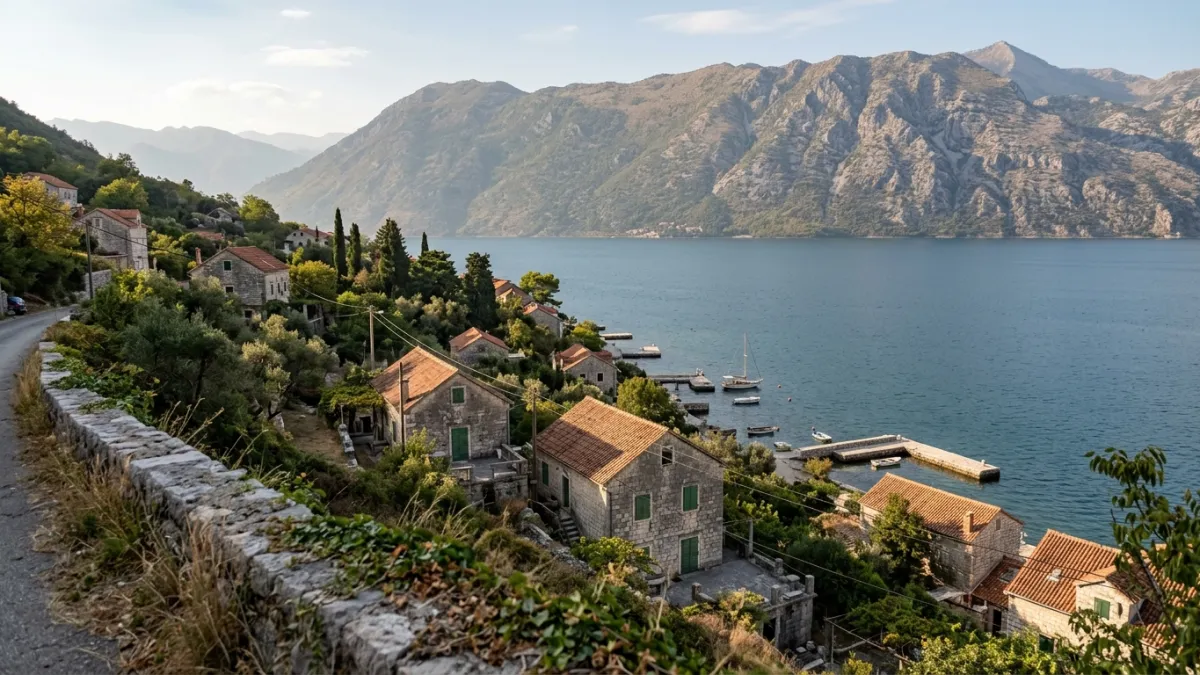
Yes. Foreigners can buy apartments, houses and building land in Montenegro in their own name, whether they come from the USA, the UK or Germany. A short list of property types is closed to them, and that list is where expensive mistakes happen.
Yes, foreigners can buy property in Montenegro: apartments, houses and building land can be bought in your own name, whether you hold an American, British, German or any other passport. The exceptions are a short list of restricted property types, mainly agricultural land, forests, islands and land within 1 km of the land border.
That is the key fact. The rules come from the property law and are summarised in the Chambers Real Estate 2026 guide for Montenegro (updated 7 May 2026) and the CMS expert guide. You do not need a local partner, a residence permit or a Montenegrin company to buy a flat in Budva, a house in Herceg Novi or a building plot near Bar. You do need to know which kind of land you are actually buying, because the listing will not always tell you.
What foreigners can buy in Montenegro
As a foreign private person you can own, in your own name:
- Apartments in residential buildings, old or new.
- Houses, including the land the house stands on.
- Building land (land zoned for construction).
- Commercial property such as shops and offices.
Ownership is recorded in the real estate cadastre, and the extract is called the title deed (list nepokretnosti). Once you are registered there, you are the owner with the same protection as a local owner. Registration is what makes you the owner, not the signature on the contract.
What foreigners cannot buy
The law lists categories that foreign persons may not own. According to Chambers 2026 and CMS, these are:
| Restricted category | What it means in practice |
|---|---|
| Agricultural land | Fields, orchards, olive groves and vineyards registered as agricultural |
| Forests and forest land | Wooded plots, even if they look like a nice building spot |
| Property within 1 km of the land border | Relevant near the borders with Croatia, Bosnia and Herzegovina, Serbia, Kosovo and Albania |
| Property on islands | Islands are closed to foreign ownership |
| Cultural monuments of special or exceptional importance | Certain protected historic buildings |
| Natural resources and goods in general use | Assets the law reserves for general public use |
| Areas closed for national interest or security | Military or security zones |
The most common trap for foreign buyers is the first line. Many attractive plots on the hills above the coast are still registered as agricultural land or forest. A seller may describe them as "land with sea view" or "plot for a villa". The cadastre classification is what counts, not the description in the advert.
The 5,000 m² exception
There is one important exception. A foreign natural person may acquire up to 5,000 m² of agricultural or forest land, but only if the purchase includes a residential building on that land (Chambers 2026; CEE Legal Matters 2025). A typical example is an old stone house with a garden and olive trees. Without a house on the land, the exception does not apply.
Long-term lease and concession
For restricted categories, a long-term lease or a concession is possible for foreigners (CMS). That is a different legal position from ownership, and its value depends entirely on the contract. Have any such contract reviewed by a lawyer before you pay anything.
Americans, Brits and Germans: is there a difference?
For buying an apartment or a house, the rules above apply to all three nationalities in the same way. The differences show up elsewhere.
Reciprocity. Some agency websites claim that your nationality or reciprocity between countries can matter. I found no official or law firm source for this in 2026. Check with your lawyer whether your nationality matters for the specific property.
Tax treaties. A non-resident who earns income in Montenegro, for example rent or a capital gain on resale, pays 15 % withholding tax, which a double tax treaty can reduce. Montenegro has treaties with more than 40 countries, including Germany and the UK, but none with the USA or Canada (Chambers 2026). For an American owner that matters more than for a German or British owner. Your tax adviser at home needs to look at this before you buy, not after.
Currency. Montenegro uses the euro. A German buyer paying from a euro account has no exchange-rate risk on the price, and Montenegro is in the SEPA payment area, so a transfer from an EU account works like a domestic euro transfer. An American or British buyer pays in euros too. A move in the dollar or pound between offer and completion changes what the property costs you at home.
EU citizens and the future. In March 2025 Parliament amended the property law so that EU citizens get the same property rights as Montenegrin citizens once Montenegro joins the EU (European Commission, Montenegro 2025 Report). That equal treatment does not apply yet. Restrictions on agricultural land for EEA citizens remain for now. The government aims to join in 2028, but no EU institution has confirmed a date. A German buyer today is in the same position as an American buyer when it comes to farmland.
Buying through a Montenegrin company
A company registered in Montenegro (a d.o.o.) is a domestic legal person. It can buy real estate without the restrictions that apply to foreigners, so foreign investors often set one up, for example to buy land with agricultural status (Chambers 2026; CMS).
This sounds like an easy fix. It is not automatically one. A company has running costs: bookkeeping, annual filings, and corporate income tax of 9 to 15 %. Profits and sale gains are taxed under corporate rules, and getting the money out to you personally can create another layer of tax. For a single holiday apartment, a company usually adds cost and paperwork without any benefit, because you could buy the apartment in your own name anyway.
A company can make sense for a land project or a business. Decide it with a lawyer and a tax adviser who look at your whole situation, including the rules in your home country.
What buying property does not give you
Buying property in Montenegro does not give you citizenship. The citizenship by investment programme ended on 31 December 2022, and I found no new programme since.
Buying property also does not automatically give you residency. Since January 2026, non-EU owners reportedly need a property with an assessed value of at least €150,000 to apply for a one-year temporary residence permit, and the rule is under constitutional challenge. Years on that permit do not count towards permanent residence (Government of Montenegro). Confirm the current rules with a licensed lawyer before you rely on any of this.
How to check what you are really buying
The legal question "can I own this?" is answered by documents, not by the agent. Before you sign anything or pay a reservation fee:
- Get a fresh title deed (list nepokretnosti) for the exact parcel and unit. Check the owner, the area and the land classification.
- Read the encumbrance section ("tereti") for mortgages, liens or court measures.
- Check the location against the border zone and any island or protected status.
- Check that the building on the ground matches the record. Mismatches between the cadastre and reality are a known issue, and the European Commission calls the land cadastre "incomplete".
- Ask for the use permit (upotrebna dozvola) for any building you buy.
A lawyer handles the legal checks. What a lawyer at a desk cannot see is whether the house in the photos is the house on the parcel, whether the "garden" is really a neighbour's olive grove, or whether there are cracks and damp behind the fresh paint. That is where an independent inspection by someone who takes no commission from either side helps. If you are looking at a property from abroad, see the packages.
Your next step
Before you fall in love with a listing, ask the agent for the parcel number and a current title deed. If they cannot or will not provide it, treat that as your first answer. If they do, have a lawyer confirm the land category and ownership, and only then talk about price.
Frequently asked questions
Do I need a residence permit to buy property in Montenegro?
No. A foreigner can buy and register an apartment, house or building land in their own name without holding any residence permit in Montenegro.
Can a foreigner buy property in Montenegro without travelling there?
It is reported as possible with a power of attorney signed and notarised in your home country, apostilled, and then translated by a sworn translator in Montenegro. Ask your lawyer to confirm the exact form before you sign it.
Can a foreigner get a mortgage in Montenegro?
Some Montenegrin banks lend to non-residents, but on stricter terms than for locals. There is no reliable public figure for rates or down payments, so ask the banks directly.
Is buying an old stone house with olive trees allowed for a foreigner?
Often yes, if the land is up to 5,000 m² and the purchase includes the residential building. Check the land classification and the size on the title deed before you agree on a price.
Sources
- practiceguides.chambers.com - practice-guides/real-estate-2026/montenegro
- cms.law - en/int/expert-guides/cms-expert-guide-to-commercial-real-...
- ceelegalmatters.com - real-estate-2025/real-estate-montenegro-2025
- ecoi.net - en/file/local/2132149/montenegro-report-2025.pdf
- gov.me - en/article/permanent-residence
- imidaily.com - program-updates/montenegro-sets-e150000-minimum-for-prope...
General information, last checked October 18, 2026. Laws, taxes and prices change. This is not legal, tax or investment advice. Check your case with a licensed lawyer before you sign.